
Category Archives: featured

‘In stand-up terms, it’s a killer finish’

Des Bishop talks to the ‘Irish Times’ about his upcoming Edinburgh show.
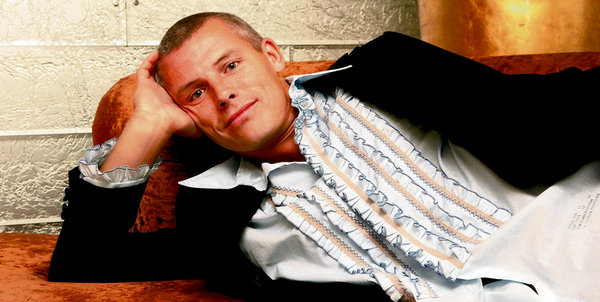

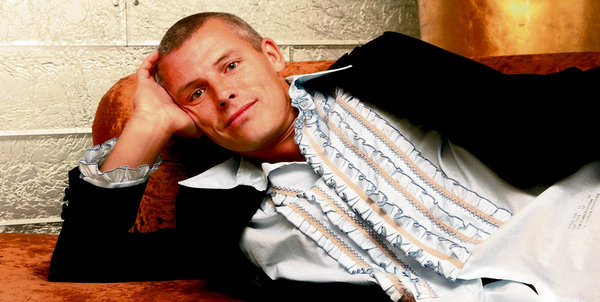
Des Bishop’s new show is based on the life of his father, who has lung cancer – but, rather than being a coping or avoidance method, the comedian says it is a legacy

CAN THERE be a greater challenge for a comedian than getting a room full of strangers to laugh in the face of death? There are not too many people who would suggest there is much comic material to be mined from terminal illness, but for Des Bishop, the question is no longer a theoretical one – it is exactly what he aims to do with his deeply personal new show, My Dad Was Nearly James Bond.

Even for a comic who has displayed a continuous desire to stretch himself and his material – whether that involves making documentaries about learning Irish or working with marginalised communities – this show is a departure, both for himself and for his audience.

“The show is all about my dad,” says Bishop, jetlagged after returning from his family in New York, but still engaging, still full of focused energy. He has been back in the US a lot more in recent months – late last year, his father Michael was diagnosed with terminal lung cancer. For many, that would be a cause for private sorrow, but the storyteller in Bishop can’t avoid, or wouldn’t let himself avoid, confronting it in public.

“The show will play almost like a funny documentary, a funny story about a real life, and how illness affects the relationship between a father and a son, how it affects the dynamic in a family, loads of things. It’s me trying to make sense of the most profound moment anybody has in their lifetime – one of their parents heading towards death.”

If these are weighty issues for a comedian to deal with, it seems Bishop feels compelled both to find the humour in the situation, and to compose a fitting tribute to his father.

“I’ve wanted to tell his story since even before he got sick. He was raised in Midleton, then lived in England most of his younger life. He was a physical fitness instructor, but then broke his back on a trampoline and had to find a new job. Somebody suggested he become a model – he was a very good-looking guy – and then acting became his ambition. He had bit parts in Day of the Triffids, Zulu, just bit parts. He was asked to audition for James Bond in On Her Majesty’s Secret Service , because he was in the same modelling agency as George Lazenby [the Australian model who won the part].

“But he didn’t get it, and he never kicked off as an actor. By 1976, I’d been born, and my parents were living in the States, but he figured it wasn’t stable enough being an actor and model, so he became a retail manager. All throughout our lives, we thought it was really cool that he was in those movies, but he had a lot of regrets, that he had this life and it no longer was.

“I always wanted to tell the story about the contrast between his regrets about not living the fantasy life of an actor and how he gave up that life to raise us in a stable way. That is so much more heroic than any nonsensical James Bond, fickle celebrity thing, which is so meaningless. I wanted to contrast those things.” He pauses. “The heroics of fatherhood. That show I always wanted to tell.”

The process has been made possible by his father’s full involvement – the material Bishop premiered and honed on a lengthy tour of Australia earlier in the year has evolved into a family project. “I don’t think it’s doable any other way,” he says. “My dad is involved in this, he’s a co-writer on the show. It’s only doable because it’s a project we’re doing together; it’s not doable after he dies, it won’t be funny then, because it will be just sad. I’ll be sad. There’s something uplifting about doing a project together, there’s something uplifting about what you learn as a result of your parents being ill, there are loads of strange positives.”

Alongside the My Dad Was Nearly James Bond tour, which opens in Edinburgh for a month-long run before touring here in November, is a documentary, currently being made by film-maker Pat Comer, who worked with Bishop on In the Name of the Fada , the series about Bishop moving to Connemara for a year to learn Irish.

“It’s like a legacy. For a guy who had regrets about giving up his performance, his final act is a big f***ing performance. It’s his life, it’s his life on screen, and it’s a worthy story. That’s flattering, as well as frightening. Pat has a great relationship with my parents, they trust him a lot, but my dad’s a ham, he doesn’t mind giving the access.

“For the documentary, Edinburgh is the focus point. You get a lot of space to do unique things in Edinburgh. The pressure to be funny all the time is different. Conall Morrison from the Abbey is having a creative input, because it’s more dramatic than other shows, and we have a lot of footage and photographs to work into it. It’s definitely the show I’ve put most work into. I’m quite stressed about it.”

Are the show and documentary a type of coping mechanism for the Bishop family? “It certainly counteracts the negativity, all we’re thinking about is the show. But that’s not the purpose of it, we didn’t set out to design a coping mechanism, it wasn’t a conscious decision. It is a great distraction – I have to admit, it’s nice to have this focus point to head towards. The show developed when I was in Australia for three months – I didn’t have a choice, really, because it was the only thing on my mind. When you’re doing a show about your dad, you feel a connection, because every night you’re sharing those stories. I guess that was a way of dealing with it.”

There’s also support from an unlikely source. “Dad’s oncologists love it. With stage-four lung cancer, at best you can buy time, but what’s the point of buying time if you can’t use it? You don’t go through all that bullshit of chemo if you can’t do something meaningful, and what can be more meaningful than doing something with your family? For the oncologists, this is perfect – there’s a purpose to their work, he’s not just watching the World Cup.”

Will people pay to be entertained by a discussion about the prospect of losing a parent, about coping with the regrets that accumulate over the course of a lifetime, or the difficult sacrifices of parenthood?

In Bishop’s assured hands, they probably will – this is a comedian, after all, who, despite making his name as the cocky American who pokes fun at Irish idiosyncrasies, has never shirked away from dealing with difficult, personal issues, whether involving his own testicular cancer or alcoholism.

“The testicular cancer is maybe what allows me to do this show,” he says. “It gives me some sort of a hint of comedic authority on dealing with the issue. I use one of the old testicular cancer jokes to let the audience know how the show is going to go. We’re going to laugh at this stuff.”

The material previewed at recent performances at comedy festivals in Kilkenny and the Iveagh Gardens reveals a delicate balance between the hilarious and the touching – often simultaneously. Bishop’s sincere, honest delivery leaves no room for the mawkish.

“Leave nothing unsaid,” he tells the audience. “That’s the best advice.” Leaving nothing unsaid, it turns out, can be as funny as it is life-affirming – especially when there are heavy doses of morphine involved.

“Everybody goes through something like this,” he says, explaining where the humour lies. “Most people will have an expectation of loss, and the awareness of the loss of your parents being imminent. And most comedy thrives on familiarity, and if sex and everyday life and so on can be funny, why can’t these things like loss and death be funny? These are shared experiences that, once pointed out, people will think ‘I never thought of it that way, even though I experienced it that way.’ We make jokes about strife between men and women all the time, about divorce, and that’s also sad, that’s equally about loss. Why can’t we find the humour in death?”

Listening to Bishop talk about his father – passionate, thoughtful, realistic – you realise that finding the humour in terminal illness isn’t a means of avoidance or a mere coping mechanism. In truth, it sounds like a rather noble way of looking at both life and death.

“We’ve articulated it in the sense that stand-up comedy is all about how you open and how you close,” Bishop says.

“If you look at my dad’s life in terms of a stand-up comedy gig, all the regrets in the middle are irrelevant, because this is a f***ing strong finish. In stand-up terms, this is a killer finish.”

Could You Save A Life?

Adam Vincent talks to the Herald Scotland about long distance flights, the importance of CPR, and his current stand up show playing at the Assembly Rooms.

It all started with those dreaded words: “Would anyone with medical experience please make themselves known to the cabin crew?”

The setting was a jumbo jet somewhere between Australia and east Asia. Adam Vincent, part-time stand-up comedian, was going on his honeymoon with his new wife, Nicky. Two rows ahead, air stewardesses were kneeling by a man, looking anxious. Adam was a registered nurse but had only qualified a month earlier. He had never actually worked as a nurse. Besides, he’d just woken up. Yet he had to do something.

“I said to them ‘I’m Adam and I’m a nurse’, which was kind of true,” he says, “but I’d bitten off more than I could chew.”

He found himself looking down at a man in his 70s, who was grasping at his chest. Adam told the hostesses he needed oxygen and the device for measuring blood pressure. “I didn’t even know what it was called,” he says.

The man’s wife was shaking a bottle of pills, but spoke no English, just Hebrew. What were these pills? Adam wasn’t sure but the drug’s name rang a bell. As far as he knew, it dilated the blood vessels, which could make the man pass out if his blood pressure was too low.

Meanwhile, his patient was showing more and more signs of pain. The hostesses went to get another nurse, but there wasn’t time to wait. Adam had to act. So he gave the man his drugs – “a pretty risky call”, as he admits.

At first, everything seemed OK. The man’s condition started to improve. Satisfied, Adam returned to his seat. “I said to Nicky, ‘We are so getting an upgrade’. For 20 minutes, nothing happened, and then I heard a blood-curdling scream. Straight away, I knew it was the man’s wife.

“I jumped up and went straight to him. He’d collapsed. He’d got no pulse and he was cold.”

Trying to master his own growing panic, Adam concentrated hard and noticed that the chest was slightly rising and there was, after all, a faint pulse. “I regret doing it, but I gave him a light slap on the face to wake him up,” says Adam. To his huge relief, the man came round. Adam set about trying to feed him water to increase his blood volume and pressure.

By now, the captain had arrived. They could land in Manila, he said.Adam’s instinct was to land, but the other, more experienced nurse judged that there was no need. So the plane continued and for three anxious hours, Adam remained with his patient – his first and most memorable patient – hoping desperately he would not deteriorate. Thankfully, he didn’t. By the time the plane landed, the man was able to walk off and, with a smile and a nod, was gone, leaving Adam feeling exhausted and anxious.

He still wonders what became of his memorable charge. “I lost a lot of sleep afterwards with worry,” he says. “I still do now.”

Six months on, Adam has built a comic routine around the incident, which he is performing at the Edinbugh Fetsival Fringe in Edinburgh, but he says: “It was actually really scary.”

He realises now how little he knew. Still, if required to, he would step forward again, because “there may not be anyone else who can help”.

Adam’s experience highlights how members of the public must sometimes step in and make life and death decisions when there are no doctors available. Yet, unlike Adam, people often lack the basic medical knowledge that could make the difference.

Jim Dornan, training manager at St Andrew’s First Aid, says: “When someone has had a cardiac arrest, the simplest things – like knowing CPR – can make the difference between life and death. It can take four minutes to choke to death and the average response time for an ambulance is eight minutes.

“Most people only think about doing first aid training after they have come across a scene, perhaps involving an elderly relative or, worse still, a child.

“First Aid is a social skill that everyone should have.”

Carolyn McCafferty, 20, a student nurse from East Kilbride, who volunteers with St Andrew’s First Aid, had to put her skills into action in her own home. Her father Stephen, 53, an electrical engineer, had been in hospital for a varicose vein operation and still had a bandaged leg. “We were arguing about something,” Carolyn says. “He turned away to go into the kitchen and in a split second, his bandage went from white to red, behind the knee.

“That was the end of the argument. I said ‘Sit down, your leg’s bleeding a little’ but didn’t tell him how badly. I put his leg up on a chair and put a tea towel on it to stop the bleeding while I called an ambulance.”

Carolyn’s swift action and calm attitude helped ensure the bleeding stopped before it became a serious problem.

“The thing about first aid is that you’re calm on the exterior but screaming inside,” she says. “But the training does help an awful lot.”

David Rankine, 30, runs MTC Media web development company in Dundee and is a seasoned first aider.

He needed all his reserves of experience when he witnessed a serious accident on the M90 near Rosyth one afternoon. A car heading south flipped on to its roof on the hard shoulder with five people inside, throwing one person onto the carriageway. David, heading north, immediately stopped the car on the hard shoulder, put on his high visibility vest, and, carrying his first aid equipment, crossed the carriageway to the scene.

As he arrived, one man was pulling himself out of the car and the man on the carriageway was hauling himself to the verge. Two other bystanders had stopped and David swung straight into action, telling them how to help. The three men and two women, all in their 20s, were all conscious, but were shocked, bleeding and complaining of neck and back pain. The first priority was to get them safely on to the verge and lying as flat as possible.

David triaged them, with the man who was flung out of the car showing the worst injuries, on his back and legs. With several complaining of back pain, he had to categorise them as potential spinal injuries and put all of them in neck braces – he was well enough prepared to have six with him. By the time the paramedics arrived, the situation was safe and calm.

He says: “Everyone should put themselves through at least basic first aid. Knowing CPR, how to stop bleeding, when to move someone and when not to, could make all the difference.”

Adam Vincent performs in Vital Signs in the Baillie Room, Assembly Hall, Edinburgh, Aug 5-29 at 6.45pm.

Veruca obsessive takes to Fringe

Matthew Hardy - Willy Wonka Explained; The Veruca Salt Sessions

Matthew Hardy, the man behind bringing “Veruca Salt” to the Fringe talks to Three Weeks about the journey to his show; Willy Wonka; the Veruca Salt Sessions.

Many comedy shows at the Edinburgh Fringe have quirky premises, but Matthew Hardy’s possibly wins the prize for being the quirkiest this year. And if he does, by some weird turn of fate, miss out on that particular accolade, he can surely be assured the Stalker Of The Fringe award instead.

Hardy told ThreeWeeks about the premise to ‘The Veruca Salt Sessions’ this weekend. “The first time I ever saw a film in a cinema, aged five”, he explains, “it was the original seventies version of ‘Willy Wonka & The Chocolate Factory’. I thought I was actually in every scene, and that the camera’s eyes were mine. I was totally enraptured”.

“Then Veruca Salt came on screen”, he reminisces, “and my world shifted on its axis. A little girl, bossing the adults about – including her Dad?! I was too young to understand love but I had an urge to pull her hair, right then and there”.

“Cut to thirty years later,” he continues, “and I was struggling to overcome being ditched by my girlfriend who’d I’d lived with for three years. Through tears, and many beers, I found myself watching the original ‘Willy Wonka’ to soothe my soul. It wasn’t a conscious decision”.

The friend whose couch Hardy was crashing on at the time noticed that not only was his temporary flatmate always watching the same kids movie again and again, but that he was always watching a Veruca Salt scene. “Eventually he said ‘if you love Veruca so much, why don’t you see if she’s keen for a catch-up?’ I replied ‘back off mate, she’s only ten’. But he pointed out that the actress who played her would be quite a bit older by now”.

And so Hardy started trying to track down – or stalk, depending on your view point – Julie Dawn Cole, the actress who played Veruca Salt in the originally ‘Willy Wonka’ film. And somehow he found her. And she replied. “One day I received an email from Julie saying, simply, ‘Hello, can I help?’ That was perhaps the single most exciting, exhilarating moment of my entire life. Fiction became fact, fantasy became reality”.

And, in case you are in any doubt of that fact, Hardy and Cole will now take to the stage together for a magical Fringe show this August. “If I say so myself, the 100% true story of what happened next is one of the most tragic, yet triumphantly uplifting tales of hope reaping rewards, ever told”, Hardy says. “It’s about faith, and it’s funny”.

Matthew Hardy and will Julie Dawn Cole perform ‘Willy Wonka Explained: The Veruca Salt Sessions’ at The Pleasance Courtyard from 4-29 Aug. You can check the trailer here and order tickets here.